Role of Materials Science in Transforming Human Society
🧱 How Materials Science Transformed Human Society
From stone to silicon, every leap in human civilization has been written not in words — but in materials.
🌍 A World Built from Matter
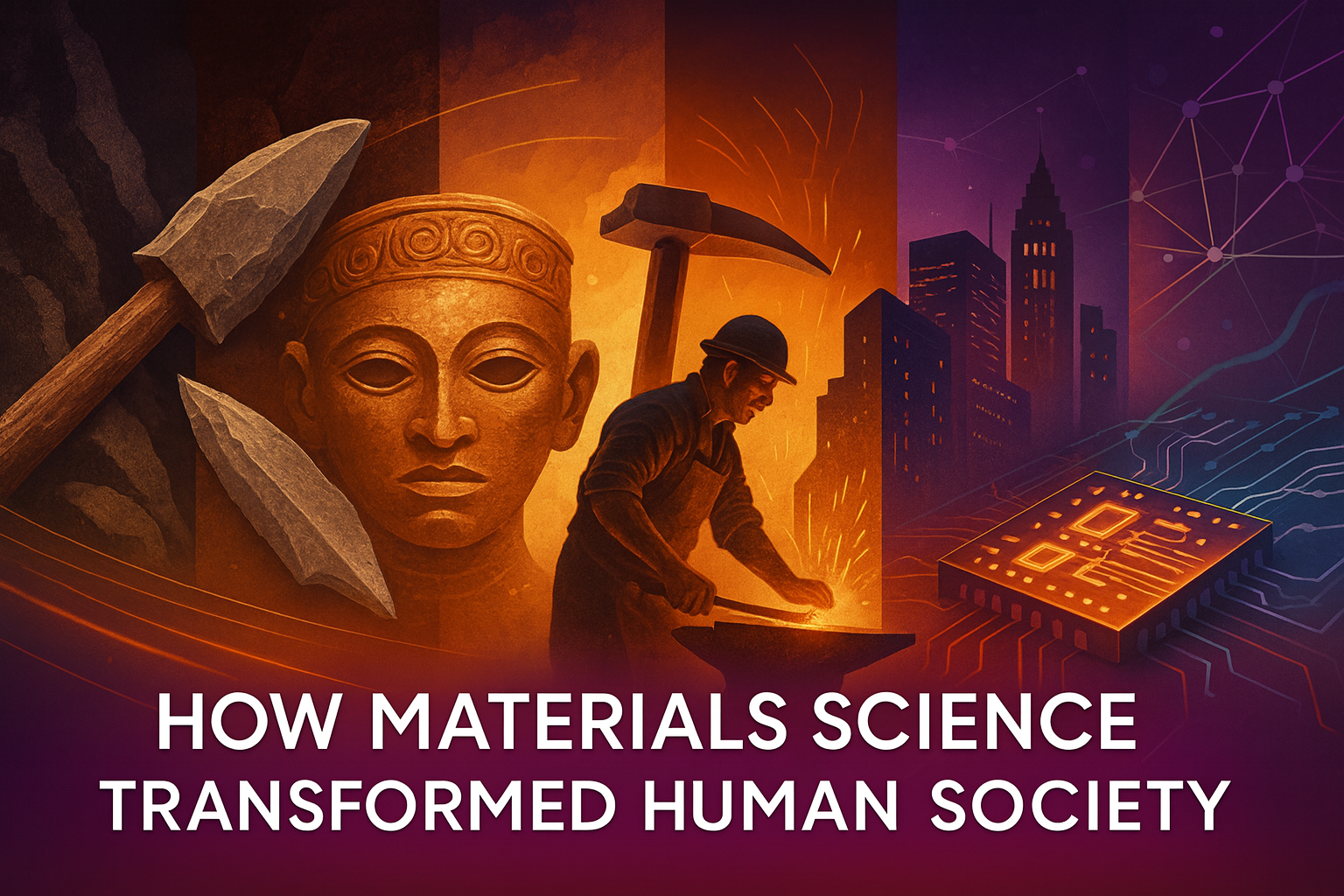
The story of humanity is, in truth, a story of ideas and materials. Every era of progress, every transformation of culture, begins with the mastery of a new substance. The Stone Age wasn’t simply about primitive tools; it was about understanding hardness, fracture, and the potential of nature’s raw resources. The Bronze Age emerged when humans discovered how to mix copper and tin, marking one of the earliest acts of deliberate materials engineering. That single step led to stronger tools, organized labor, trade, and eventually cities. Then came the Iron Age, when the mastery of a tougher, more abundant metal reshaped agriculture, warfare, and infrastructure — setting the foundations of modern civilization.
The Industrial Revolution marked a turning point in our relationship with materials. Humanity shifted from discovering substances by chance to designing them with purpose. When steel became cheap and abundant through the Bessemer process, it transformed the landscape of civilization. Cities rose vertically, ships became mightier, and bridges stretched farther than ever before.
But something deeper was happening. Science was replacing serendipity. For the first time, materials were being predicted, measured, and engineered through the principles of chemistry, physics, and thermodynamics. This new approach gave birth to the field of materials science — a discipline that allowed humankind to transform curiosity into creation.
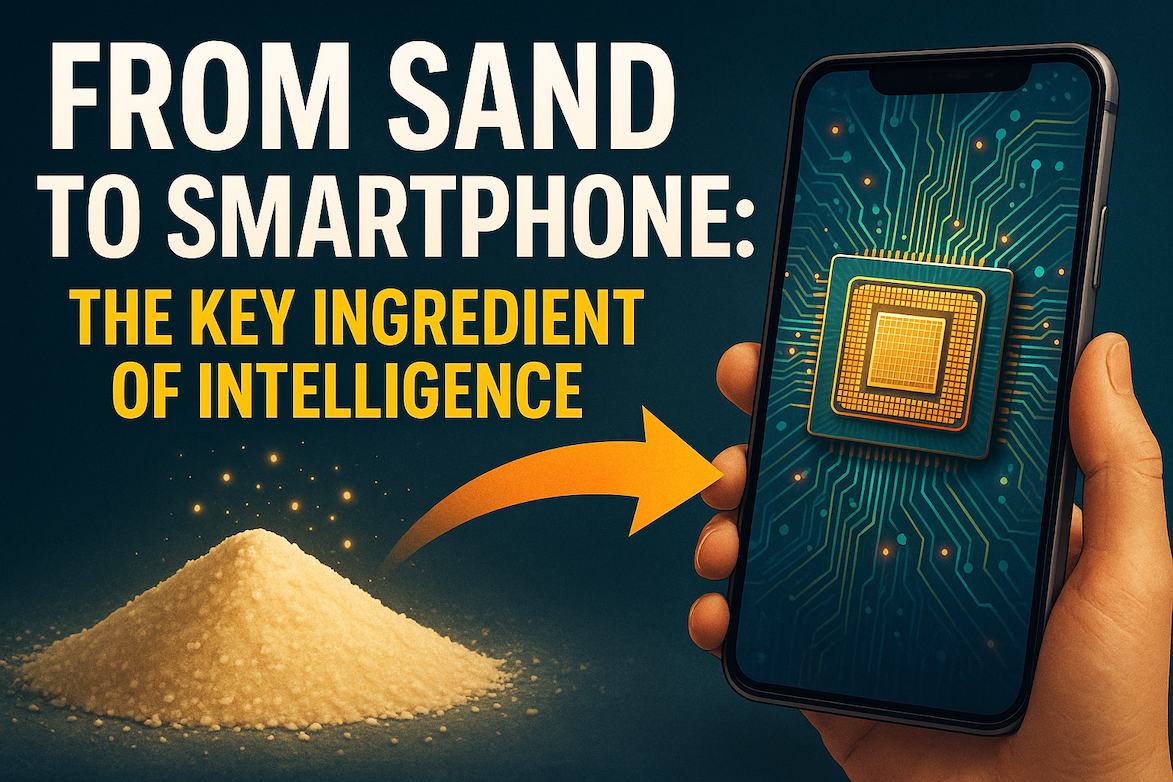
Fast forward to the 20th century, and a shiny gray crystal called silicon changed the world forever. From the transistor to the microchip, silicon became the building block of the digital age. It reshaped not only our tools but also our cognition. The way we communicate, learn, and think today is built on the precision of materials engineering at the atomic scale. Silicon didn’t just power technology; it redefined what it means to be human in the information age. Through it, we built a world where ideas travel at the speed of light and information is as essential as oxygen.
In the 21st century, materials science quietly shapes every aspect of modern life. Polymers form the protective skins of our electronic devices and the sutures that heal us after surgery. Ceramics endure the extreme heat inside jet engines and spacecraft. Composites make our cars lighter and airplanes more efficient. And smart materials — which can respond to heat, light, or pressure — are beginning to blur the line between the mechanical and the biological. Even our pursuit of sustainability rests on the progress of materials science. The efficiency of solar panels, the storage capacity of batteries, and the recyclability of plastics are all fundamentally materials challenges. Every innovation that moves us toward a cleaner, smarter future begins with the discovery or reinvention of a material. “Every innovation begins with the discovery of a new material — or a new way to use an old one.”
From prehistoric glass beads to nanostructured lenses, materials have always expanded the boundaries of perception and possibility. Glass lenses opened our eyes to both the cosmos and the microscopic. Copper wires and fiber optics linked continents and connected the collective thoughts of humanity. Titanium implants and biopolymers now bridge the gap between biology and engineering, helping humans heal, move, and live longer. Every revolution we celebrate — whether industrial, digital, or green — is, at its heart, a materials revolution. Each milestone in human progress can be traced back to a substance that changed how we think, create, and connect.
Today, the next frontier of materials science lies in the algorithm. With the help of artificial intelligence and data science, researchers can now predict the properties of materials before they ever exist in the lab. This shift from trial-and-error to data-driven design is accelerating discovery at an unprecedented rate. Imagine a future where we can design matter with intention — concrete that heals itself after cracks form, biodegradable electronics that leave no trace, or superconductors that make clean energy transmission effortless. This is not the distant future; it is happening now in research labs around the world, powered by computation, simulation, and human creativity.
In the background, materials science is the quiet architect of human progress. It shapes the way we build, communicate, heal, and dream. From the stones that built our first shelters to the semiconductors that connect our world, materials have defined what it means to be human. So, the next time you touch glass, start your car, or swipe your phone, pause for a moment and remember: We shape our materials — and in turn, they shape us.
📚 Further Reading
- 🎥 The Materials That Made Civilization – Watch on EIHE YouTube
- 📖 Ashby & Jones, Engineering Materials 1: An Introduction to Properties, Applications, and Design
- 🧩 The Royal Society: Frontiers of Materials Science and the Human Future